Cost-Effective Molded Panel Doors for Project Orders
- No decorative moldings are needed to give the door a raised panel look.
- Standard designs are selected from the catalog, making design confirmation easier.
- Smooth or woodgrain surfaces can be selected according to the required finish.
- The panel design is molded directly into the door skin, helping to control costs.
More Choices for Molded Panel Door Projects
Our molded panel doors are available in more than 50 colors and over 30 designs. The range includes deep-pressed and shallow-pressed designs. The molded MDF door skins are 4 mm thick, with a solid wood perimeter frame inside the door leaf. A standard honeycomb-core door leaf weighs approximately 15–20 kg, depending on the door size.
Send your molded panel door requirements to Wanbaoyijia and receive a proposed solution within 24 hours.
Molded Panel Door Options for Different Project Needs
Wanbaoyijia molded panel doors are available with different panel depths and core structures to suit different design and budget requirements.

The deeper molded lines give the door a more pronounced panel shape.

The shallower molded lines create a simpler and more restrained appearance.

The door leaf features a grooved design with clean, smooth lines.
Molded Panel Door Solutions for Smoother Project Delivery
Wanbaoyijia molded panel door solutions cover sizing, frames, hardware preparation and order coordination, helping you reduce site work and keep your project installation organized.

Door leaf dimensions can be produced according to your approved door schedule, reducing on-site adjustment.

Door frames can be supplied according to your wall thickness and installation requirements, making installation more straightforward.

Hinge, lock and handle positions can be machined according to your confirmed drawings, saving installation time.

Each door is checked and marked before packing, helping you reduce installation errors on site.

After glass openings or other holes are cut, the exposed board edges are sealed to reduce moisture absorption and swelling in your doors.

Different standard panel designs can be combined in one project order, making room-by-room selection easier for your project.

Door leaves, frames and accessories can be labeled by room number or opening number, helping your site team distribute them faster.

The allowable trimming range is confirmed according to the width of the solid wood frame inside the door leaf, helping you avoid cutting into the molded lines during on-site trimming.
Structural Features of Molded Panel Doors
Wanbaoyijia molded panel doors use panel designs pressed directly into the MDF, giving the door leaf its design and shape without changing its basic structure.

Compared with assembled solid wood panels, the molded MDF skin helps reduce cracking around the panel lines, giving you a more stable surface for long-term use.

The panel design is pressed directly into the door skin, allowing your door leaf to maintain a standard overall thickness.

The flat areas and molded lines use the same facing material, keeping the color and texture consistent across your entire door surface.

The lock installation area remains flat, leaving enough space for your lock and handle and preventing interference with the molded lines.

The molded curves connect directly to the flat surface, reducing the number of joints where dust can collect and making daily cleaning easier for you.

The molded lines are formed within the door surface and do not protrude noticeably, reducing damage during stacking and handling before your doors arrive on site.
Support for Recessed Areas
In the flat areas of a molded panel door, the distance between the two door skins is usually 42 mm. However, the recessed curved design changes the distance between the two skins, which normally ranges from 32 mm to 42 mm.
We place compressible honeycomb paper in these areas so that it can adapt to the molded shape. Compared with timber strips or particleboard, honeycomb paper will not press against or damage the recessed door skin.
This reduces unsupported empty areas inside the door leaf and distributes pressure during pressing. When you receive the door, the recessed areas will produce less of a hollow sound when tapped, and the molded door skin is less likely to be damaged by pressure from the internal filling material.


Accurate Molded Pattern Alignment
The two molded door skins have the same design and must be arranged as mirror images after being pressed into a door leaf.
During cutting, the two door skins are placed on top of each other, and the distance between the molded pattern and the door edge is calculated. After cutting, the pattern on each skin must be the same distance from the door edge.
Before pressing, we check the top, bottom, lock side and hinge side of each door skin to prevent one skin from being placed upside down.
After pressing, the door leaf is kept stable until the adhesive has cured to reduce movement. Double doors are also paired and checked to ensure that the molded patterns and handle positions are consistent.
These steps help prevent the patterns on your doors from being positioned at different heights or at different distances from the left and right edges after installation.
Helping You Choose the Right Molded Panel Door

Browse our current range and choose the right door style for your project.

Compare honeycomb and semi-solid cores to choose the right level of internal support for your project budget.

See how we support the recessed areas, align the front and rear door skins, and inspect double doors before delivery.
Flexible Production Across 20 Door Factories

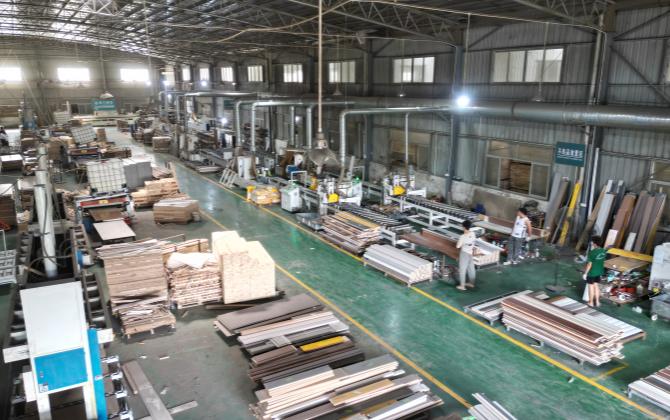
Wanbaoyijia has 15 years of experience in supplying wooden doors and works with 20 door factories. We arrange production with the right factory based on the molded panel door design, color, core structure, order quantity and delivery time, reducing the limitations of relying on a single factory’s molds and production capacity.
Molded Panel Door Solutions in Real Projects
See how we used different molded panel door designs and core structures to meet the appearance, budget and functional requirements of different projects.

In a villa project in Ethiopia, solid wood doors were used for the master bedroom and other bedrooms. The client did not want to use a solid wood door for the storage room but wanted all the interior doors to have the same design and similar colors.
After reviewing the design plan, we recommended a molded panel door for the storage room because we had a molded design that matched the solid wood doors, with a similar color. The client accepted our proposal, reducing the overall project cost by approximately 5%.

A project in Kenya included both high-end and economy residential developments. To keep the external appearance consistent, we recommended different internal filling materials.
For the high-end development, we recommended semi-solid timber-strip filling. For the economy development, we recommended honeycomb paperboard filling. After reviewing the details of our proposal, the client agreed to the solution, and the project passed the final inspection.

A project in Tanzania required wooden doors with a more defined panel shape. The client originally considered adding decorative moldings to the surface of flush doors, but after reviewing the quotation, they found the cost too high.
We then showed the client our deep-pressed molded panel door designs. The client found the appearance suitable and the price within budget, and placed an order for 110 sets of molded panel doors.

In another project in Tanzania, the client wanted a shaped door leaf with glass while keeping the cost within budget.
After reviewing the client’s design plan, we recommended a molded panel door with glass. The glass opening was cut along the recessed lines of the molded design. The client was satisfied with the final proposal.
Molded Panel Door Factory Visits
Visitors walk through the workshop and look at door samples and finished doors.

Visitors walk through the workshop beside stacked panels and material racks.

A visitor talks with our team over tea at the office table.

Molded Panel Door Buying Guide for Project Buyers
Helping you decide when molded panel doors are suitable, compare them with flush and stile-and-rail doors, and identify the key points to confirm before placing a project order.
- Product Specifications
- After-Sales Service
- Product Details
Door sizes, colors, core structures, frames and hardware preparation can be configured according to your project requirements and budget.
Item | Specification | Item | Specification |
Door Type | Molded Panel Door | Door Skin Material | Molded MDF Door Skin |
Door Skin Thickness | 4 mm | Door Leaf Thickness | Customizable |
Door Core | Honeycomb / Semi-Solid | Internal Frame | Solid Wood |
Standard Size | 2100 mm (H) × 900 mm (W) | Size Customization | Available |
Door Leaf Weight | Approx. 15–20 kg for honeycomb-core doors | Molded Design | Deep-Pressed / Shallow-Pressed / Grooved |
Available Designs | More than 30 | Available Colors | More than 50 |
Door Frame Material | Solid Wood / Plywood | Glass Opening | Optional |
Hardware Preparation | Lock and hinge positions can be pre-machined | Lock & Handle | Optional |
Transport Protection | Wooden Battens / Optional Wooden Crate | Delivery Time | 12–15 days |
Application | Apartment / Hotel / Villa / Residential Projects | Supply Form | Door Leaf / Complete Door Set |
- If you find any molded pattern misalignment, cracked door skins, damaged recessed areas or local delamination after receiving the goods, please provide photos and order details. We will provide repair materials, replacement door skins or a replacement door leaf according to the specific situation.
- For additional orders, please provide the original order number or a sample. We will match the mold number, color, door size and core structure according to the original order records, helping reduce differences between the new doors and those already installed.
View the molded panel profiles, door skin thickness, recessed areas, door edge structure, lock block position, core filling and finished door effects.


Trusted Molded Panel Doors for Global Projects
Cartoon-Style Molded Panel Doors
Their molded panel doors are available not only in different molded designs but also in cartoon-style designs. I think the cartoon designs look very good and are suitable for my kindergarten project. The price is also reasonable, offering good value for money.
 Aline MukamanaKindergarten Project Manager | Rwanda
Good Resistance to Warping
Their molded panel doors feel heavier than those from other manufacturers. They told me that more solid wood is used inside the doors. The doors feel good when closing and have good resistance to warping. None of the more than 70 door sets I purchased have warped.
 Omar Al-HarthiBuilding Contractor | Oman
Molded Panel Door Designs Are Updated Regularly
I used to think that only solid wood doors could look good, but their molded panel door designs also look very good. They update their designs every year, which I like. Each year, there are different new designs to choose from.
 Valeria SotoInterior Door Distributor | Chile
We recommend confirming the glass size and position before production. The glass opening needs to avoid the molded lines, internal frame and hardware installation area. Cutting the opening on site without knowing the internal structure may damage the door skin.
The door leaves should be stored indoors in a dry and ventilated area. They can be stored flat or upright with full support. They should not be left leaning against a wall for long periods. Avoid direct sunlight, rain and contact with damp floors.
Standard molded panel doors are mainly intended for interior use. Long-term exposure to rain, sunlight and large temperature changes may affect the MDF door skins and the internal structure. Exterior entrances should use doors designed for outdoor conditions.
Yes. Molded panel door leaves can be used not only as standard hinged doors but also as folding doors or externally mounted sliding doors. Before production, the door leaf size, thickness, hardware positions and internal structure need to be confirmed according to the opening method.
Yes, but the existing door frame should first be checked for visible deformation or damage. When placing the order, please provide the height, width and thickness of the original door leaf so that the new door leaf can fit the existing frame.
Related Products

Glass doors balance natural light, privacy and security with tempered glazing options for varied interior projects.

Solid core doors provide stable, durable construction with selectable finishes for hotels, apartments, offices and residential projects.

Semi-solid core doors balance manageable weight, structural stability and acoustic comfort across customized project specifications.

Lightweight hollow core doors support cost-conscious apartments, rentals, hotels and large interior fit-out projects.

Standardized apartment doors support repeat orders, consistent quality and faster installation across high-volume residential projects.